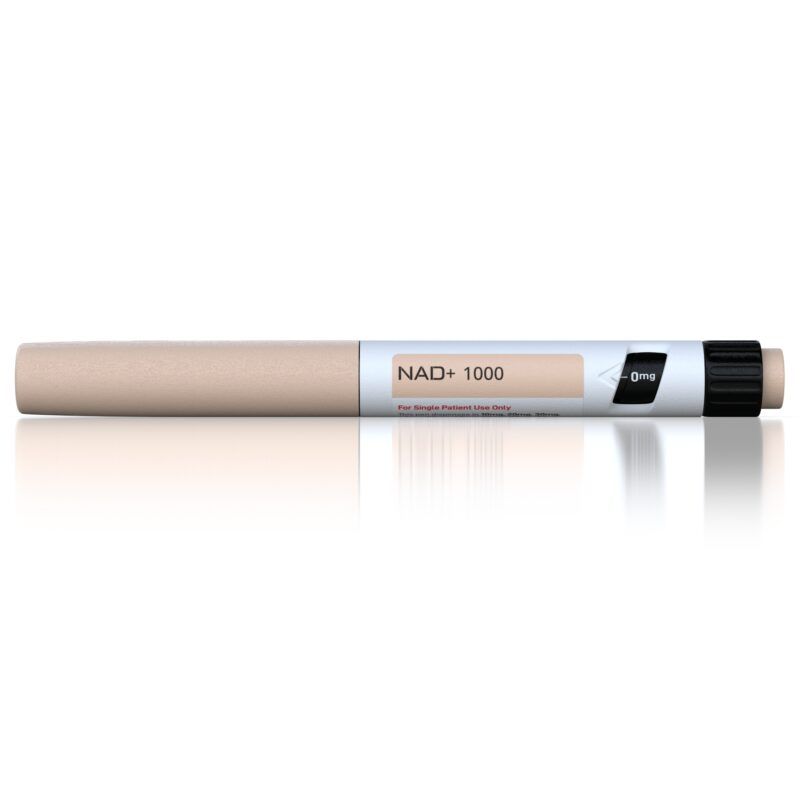
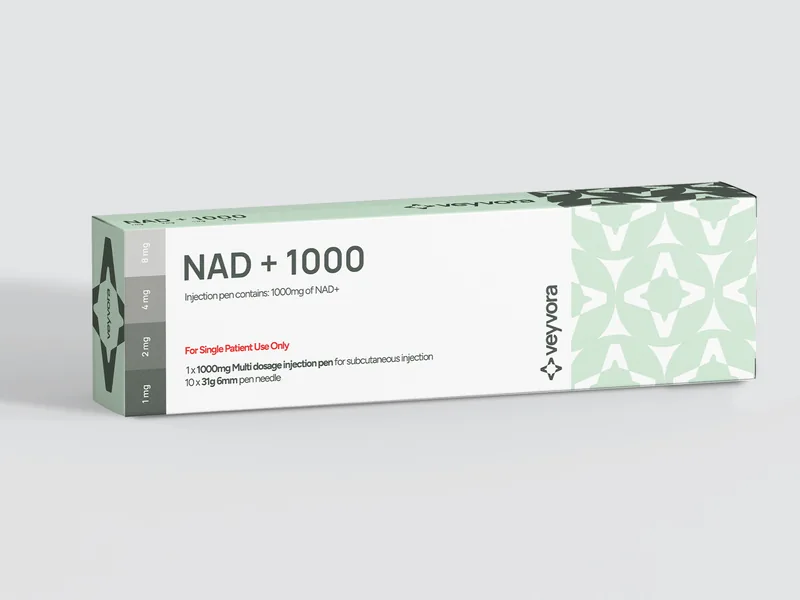
NAD+ (nicotinamide adenine dinucleotide) is the central redox cofactor of cellular metabolism, and the most-studied single molecule in the longevity literature. This independent guide reviews the evidence and where to find it.
Mechanism A coenzyme central to redox reactions and NAD+-dependent enzymes (a coenzyme, not a peptide).
Cellular energetics
Ageing (preclinical)
Metabolic health
Also known as NAD+ · Nicotinamide adenine dinucleotide
NAD+ is a coenzyme rather than a peptide — it carries electrons in redox reactions and is consumed as a substrate by sirtuins and PARPs, which is why cellular levels are a research target in their own right.
RESEARCH LANDSCAPE
Broad, and unusually well funded
Studied across mitochondrial function, DNA-repair signalling and age-related metabolic decline, with an active human trial programme alongside the preclinical work.
HANDLING
The least stable item in the range
NAD+ in solution is sensitive to heat and pH. Refrigerate at 2–8°C immediately on arrival and keep the pen cold in use; do not leave it at room temperature between sessions.
PUBLISHED RESEARCH
NAD+ human studies
Every published human study of NAD+ we have catalogued, summarised in plain English and linked to the original paper.
Research context only — not medical advice.
Martens CR et al., University of Colorado Boulder · Nat Commun
University of Colorado Boulder crossover trial of nicotinamide riboside (NR) for 6 weeks in healthy middle-aged and older adults. It was well tolerated and raised NAD+ metabolism, with hints of lower blood pressure and arterial stiffness that need confirming in larger trials.
ChromaDex-funded 8-week trial of NR (Niagen) at 100, 300 or 1,000 mg in overweight adults. It raised blood NAD+ dose-dependently with no more adverse events than placebo.
Elhassan YS et al., Institute of Metabolism and Systems Research · Cell Rep
University of Birmingham trial of 1 g a day NR for 21 days in 12 aged men. NR reached muscle, raised NAD metabolites and lowered inflammatory cytokines, but did not change mitochondrial function.
Yoshino M et al., Washington University School of Medicine · Science
Washington University (St Louis) trial of 250 mg a day NMN for 10 weeks in 25 prediabetic, overweight postmenopausal women. NMN improved muscle insulin sensitivity, but not body weight or blood pressure.
Brakedal B et al., Haukeland University Hospital · Cell Metab
Norwegian trial in 30 people newly diagnosed with Parkinson's disease taking 1 g a day NR for 30 days. It raised brain NAD (measured by MR spectroscopy), was well tolerated and lowered inflammatory markers, with a slight clinical improvement. Larger trials are under way.
Multicentre trial in 80 healthy middle-aged adults taking NMN at 300, 600 or 900 mg a day for 60 days. It was safe up to 900 mg; blood NAD and walking performance peaked at 600 mg.
Katayoshi T et al., DHC Corporation Laboratories · Sci Rep
Japanese company-run (DHC Corporation) 12-week trial of 250 mg a day NMN in healthy middle-aged adults. It raised NAD+ metabolism, was well tolerated, and showed possible benefits for arterial stiffness.
Orr ME et al., Wake Forest University School of Medicine · Geroscience
Pilot trial in 20 older adults with mild cognitive impairment taking NR up to 1 g a day for 10 weeks. It was safe and raised NAD+, but cognition did not change.
Norheim KL et al., University of Copenhagen / Novo Nordisk · Nat Aging
Danish trial in 40 people with COPD taking NR for 6 weeks. Airway inflammation (IL-8) fell versus placebo, with exploratory signs of reduced epigenetic ageing.
Ahmadi A et al., California State University · JCI Insight
US trial in 25 people with chronic kidney disease comparing CoQ10, NR and placebo (crossover). Both changed metabolic and lipid profiles but did not improve exercise capacity.
Grant R et al., Australasian Research Institute · Front Aging Neurosci
Australian pilot study (Sydney Adventist Hospital) of a 6-hour IV NAD+ infusion. Surprisingly, plasma NAD+ did not rise for the first 2 hours because it was rapidly cleared; NAD+ and methylnicotinamide then appeared in urine. This is the main published human data on 'NAD+ drips'.
Summaries are Specktra's plain-English reading of each paper. "Animal + human" papers report
both; "Trial design" papers describe a study before its results. Always read the original.
NAD+ degrades in solution far faster than the peptides elsewhere in this catalogue, so how a supplier ships and stores it matters more than the headline purity number. Cold-chain shipping is not optional for this product.
Note also that NAD+, NMN and NR are distinct molecules with different research literatures — check which one is actually being sold before comparing prices.
Because NAD+ is unstable in solution, cold-chain shipping and storage matter more than the headline purity figure — our store reviews flag which vendors ship cold-chain and publish a batch-specific COA.
FREQUENTLY ASKED
Is NAD+ a peptide?
No. It is a dinucleotide coenzyme. It sits in this catalogue because it is studied alongside the longevity peptides, not because it is chemically related to them.
How is NAD+ different from NMN or NR?
NMN and NR are precursors that cells convert into NAD+. They are separate molecules with separate research literatures.
Why does storage matter more for this product?
NAD+ in solution is heat- and pH-sensitive and degrades measurably faster than the peptides in the range. Keep it refrigerated throughout, not just on arrival.
Is this for human use?
No. The compounds Specktra reviews are sold by third-party stores for laboratory research use only and are not for human consumption.
Researcher reviews
Self-reported researcher experiences, for laboratory research context only. These are individual opinions — not verified claims, not medical advice, and separate from Specktra's evidence-based assessment above.
Researcher reviews
No reviews of NAD+ yet
Be the first to share your experience. Reviews are checked by our team before they
appear, and they never change Specktra's editorial score.
A useful review covers
Effectiveness
Value
Safety
What you'd tell another researcher before they buy
We would like to use analytics cookies (Google Analytics, through Google Tag Manager) to see which pages help
readers. They are off unless you accept. No advertising cookies. Privacy policy