Affiliate disclosure and editorial independence
Specktra is an independent review site, not a seller. Some links to stores are affiliate links: we may earn a commission if you buy, at no cost to you. Ratings follow our published rubric, except Featured Stores' scores, which Specktra sets and notes on their reviews. Featured Stores (Specktra Partners in a paid placement) are placed first in the buying guides and labelled. This page is research information, not medical advice. Full disclosure · How we test and rate vendors
About this page
- Written by
- Specktra Editorial
- Edited and approved by
- Specktra Editorial
- Last updated
- 18 November 2026
- Fact-checked
- 18 November 2026
- Sources
- Primary studies and trial registries, regulator pages, and our own checks of store pages. See references below.
Tesamorelin at a glance
- ALSO KNOWN AS
- Egrifta, TH9507
- CLASS
- Metabolic
- WHAT IT IS
- GHRH analog
- MECHANISM
- Growth-hormone-releasing hormone (GHRH) analog that stimulates endogenous GH.
- RESEARCH STAGE
- Licensed medicine in some countries
- ROUTES STUDIED
- Subcutaneous
- HUMAN STUDIES ON FILE
- 13
- FORMATS SEEN AT REVIEWED STORES
- Vial (lyophilised), Pen (pre-filled), Pen (pre-filled cartridge), Capsules/tablets, Pen cartridge (refill), Nasal spray
- CAS
- 218949-48-5
- MOLECULAR WEIGHT
- ≈ 5136 Da
What is Tesamorelin?
Tesamorelin is a synthetic peptide modelled on growth hormone-releasing hormone (GHRH), the hormone from the hypothalamus that tells the pituitary gland to release growth hormone. It keeps the full 44-amino-acid sequence of human GHRH and adds a small chemical group (a hexenoyl chain) at one end. During development it was known by the code name TH9507.
Unlike most compounds on this site, tesamorelin is a licensed medicine. In the United States it is approved — as Egrifta, and later as the Egrifta SV and Egrifta WR formulations — for one use: reducing excess abdominal fat in adults with HIV and lipodystrophy. The US label states that it is not indicated for weight loss.
That distinction matters for anyone reading a store listing. Products sold online as “tesamorelin” — mostly freeze-dried powder in vials, sometimes pre-filled pens — are research-grade chemicals of unverified identity and purity. They are not Egrifta, and none of the clinical evidence on this page was gathered on them.
How does Tesamorelin work?
Natural GHRH acts on cells in the pituitary gland (somatotrophs), prompting them to make growth hormone and release it in pulses. Tesamorelin acts at the same point. Growth hormone then raises IGF-1, made largely in the liver, and acts on fat, muscle, bone and liver cells. Among its effects, it breaks down stored fat.
In a two-week study in 13 healthy men, tesamorelin increased both the pulses and the background level of growth hormone and raised IGF-1. Fasting glucose and insulin sensitivity were not measurably changed (Stanley et al., 2011).
The added chemical group protects the peptide from an enzyme (DPP-4) that breaks down natural GHRH, so it lasts longer in the blood (Ferdinandi et al., 2007). Its half-life after injection is still measured in minutes, and every trial gave it daily.
The mechanism explains why visceral fat was a sensible target. It does not by itself prove a clinical benefit; that is a question for the trials below.
From TH9507 to Egrifta: a licensed GHRH analogue
Tesamorelin started as TH9507, a stabilised version of human GHRH from the Canadian company Theratechnologies, which holds the US licence. Its preclinical paper (Ferdinandi et al., 2007) reported that the modification made the peptide resist breakdown and gave it greater potency and a longer duration of action than natural GHRH.
A 12-week dose-ranging trial in 61 people with HIV (Falutz et al., AIDS 2005) was followed by two phase 3 trials, the first published in the New England Journal of Medicine in 2007. The FDA approved tesamorelin as Egrifta in November 2010. Two newer formulations followed: a 2 mg vial formulation (Egrifta SV), and Egrifta WR, an 11.6 mg vial approved in March 2025 that is mixed once a week and injected daily. The US label states that the two current formulations are not interchangeable.
The Egrifta name belongs to the licensed product only, and it is approved in the United States. In the European Union the marketing application was withdrawn (see the legal section).
How tesamorelin differs from growth hormone itself
Recombinant human growth hormone (somatropin) supplies the hormone itself, and it has also been tested against HIV-associated visceral fat (Grunfeld et al., 2007). Tesamorelin works one step earlier: it asks the pituitary to release the body’s own growth hormone. That has two consequences:
- It needs a working pituitary. The US label lists disruption of the hypothalamic-pituitary axis — for example after pituitary surgery, head radiotherapy or head injury — as a contraindication.
- Release follows the body’s own pattern. In healthy men, tesamorelin increased the natural pulses of growth hormone as well as the background level (Stanley et al., 2011).
Visceral fat was the studied target, not “anti-ageing”. In people with HIV, fat can build up deep in the abdomen during antiretroviral therapy, and this is linked to higher cardiovascular risk (Falutz et al., 2007). Growth hormone breaks down fat, and people with excess visceral fat secrete less of it (Stanley et al., 2011), so the trials measured visceral fat by CT scan. The US label states tesamorelin is not indicated for weight loss and describes it as weight neutral.
A brief history of Tesamorelin
Tesamorelin was developed by Theratechnologies, based in Montreal, under the code name TH9507. The first human trial in people with HIV, a 12-week dose-ranging study, was published in 2005. Two larger phase 3 trials followed, published in 2007 and 2010, along with a pooled analysis of both. Julian Falutz of the McGill University Health Centre led them, with Steven Grinspoon of Massachusetts General Hospital as senior investigator.
The FDA approved tesamorelin as Egrifta in November 2010. In Europe, the application was withdrawn in 2012 after the European Medicines Agency’s committee reached a provisional view that the benefits did not outweigh the risks.
Since then, the Massachusetts General Hospital group has studied tesamorelin for liver fat in people with HIV, with a randomised trial published in 2019. Newer US formulations followed, most recently Egrifta WR in 2025.
Research-chemical stores now also list products labelled tesamorelin. These are not the licensed medicine.
What the research says
For a licensed medicine, tesamorelin’s evidence base is narrow. Most of it comes from randomised, placebo-controlled trials in adults with HIV and excess abdominal fat: two phase 3 trials (806 people combined) with their extension phases, and later trials led from Massachusetts General Hospital on liver fat. Two meta-analyses published in 2026 pooled four and five of these trials.
Smaller trials have looked at people with type 2 diabetes, obese adults with low growth hormone secretion, and cognition in people with HIV.
What the evidence does not cover: hard outcomes such as heart attacks, use in people without HIV for weight loss or “anti-ageing”, long-term safety beyond about a year of treatment, and any research-grade product sold online.
13 published human studies of Tesamorelin on file, each summarised and linked below. Jump to the studies, or see every compound's studies in our human study index.
The key human trials gave tesamorelin as a daily injection under the skin. All but one were placebo-controlled:
- Phase 2, HIV (Falutz et al., AIDS 2005): 61 adults with HIV and abdominal fat build-up, 12 weeks, 1 mg or 2 mg versus placebo.
- Phase 3, study 1 (Falutz et al., NEJM 2007): 412 adults with HIV, 26 weeks, then a 26-week extension.
- Phase 3, study 2 (Falutz et al., JAIDS 2010): 404 adults with HIV, 26 weeks, then a 26-week extension.
- Visceral and liver fat (Stanley et al., JAMA 2014): 50 adults with HIV, 6 months.
- Fatty liver disease in HIV (Stanley et al., Lancet HIV 2019): 61 adults, 12 months.
- Type 2 diabetes (Clemmons et al., PLoS One 2017): 53 adults, 12 weeks.
- Obese adults with reduced growth hormone (Makimura et al., JCEM 2014): 39 adults, 12 months.
- Cognition in HIV (Ellis et al., J Infect Dis 2025): 73 adults, 6 months, open-label against standard care with no placebo.
Each study is summarised in plain English, with a link to the paper, in the list below.
Animal and laboratory findings
Most preclinical data come from the developer’s 2007 pharmacology and safety paper. In pigs, rats and dogs, repeated injections markedly raised growth hormone and IGF-1. Rats and dogs treated for up to four months gained more weight. Dogs also showed reversible liver, kidney and blood changes, which the authors put down to long exposure to high growth hormone and IGF-1.
The US label adds a reproductive finding: when pregnant rats were given tesamorelin, some offspring had hydrocephalus (fluid on the brain), at exposures about two to four times the clinical dose.
These are animal results. They shaped the safety warnings, but they are not evidence of any benefit in people.
What we still do not know
- Long-term safety. The controlled trials ran for up to about a year. The US label states that long-term cardiovascular safety has not been established, and that the effects of prolonged raised IGF-1 are unknown.
- Real health benefit. When the European Medicines Agency reviewed it, its committee said the fall in abdominal fat had not been shown to bring meaningful health benefits. No trial has tested whether tesamorelin reduces heart attacks, strokes or deaths.
- Durability. The effect on visceral fat is lost after treatment stops (see below).
- Populations. The phase 3 trials enrolled adults aged 18 to 65 with HIV. The label has no data above 65, safety is not established in children, and it must not be used in pregnancy. Data in people without HIV come from a few small trials.
- Ongoing research. A trial of tesamorelin plus exercise in adults aged 50 to 80 with HIV who are frail or at risk of frailty (TRIUMPH) has published its protocol; no results have been reported.
- Combinations. We know of no published trial of tesamorelin combined with another peptide.
- Research-grade products. No study has tested the vials and pens sold by research-chemical stores. Their identity, dose and purity are unknown unless a credible batch certificate shows otherwise.
The pivotal HIV lipodystrophy trials
Two multicentre phase 3 trials led to the US licence. In both, adults with HIV and excess abdominal fat, on stable antiretroviral therapy, were randomised two to one to tesamorelin 2 mg or placebo, injected daily for 26 weeks. Visceral fat was measured by CT scan.
- Study 1 (Falutz et al., NEJM 2007; 412 people): visceral fat fell by 15.2% on tesamorelin and rose by 5.0% on placebo. Triglycerides fell and IGF-1 rose by 81%. Adverse events overall did not differ, but more people on tesamorelin withdrew because of one.
- Study 2 (Falutz et al., JAIDS 2010; 404 people): visceral fat fell by 10.9% versus 0.6% on placebo. Trunk fat and waist size improved, with no change in limb fat or fat under the skin of the abdomen.
- Pooled analysis (Falutz et al., JCEM 2010; 806 people): the treatment effect on visceral fat was −15.4% versus placebo. Abdominal fat under the skin did not change significantly. Triglycerides and the cholesterol-to-HDL ratio improved, distress about belly appearance fell, and glucose showed no clinically meaningful differences at 26 or 52 weeks.
In the extension phases, people who stayed on tesamorelin kept the reduction to 52 weeks. In those switched to placebo, visceral fat came back.
Tesamorelin and liver fat in HIV-associated fatty liver disease
After the licence, researchers at Massachusetts General Hospital asked whether lowering visceral fat would also lower fat in the liver.
- JAMA 2014 (Stanley et al.): in 50 adults with HIV and abdominal fat, six months of tesamorelin reduced visceral fat and modestly reduced liver fat compared with placebo.
- Lancet HIV 2019 (Stanley et al.): 61 adults with HIV and fatty liver disease (liver fat of 5% or more) were treated for 12 months. Liver fat fell by 4.1 percentage points more than on placebo, a 37% relative reduction from baseline. At 12 months, 35% on tesamorelin and 4% on placebo had liver fat below 5%. Fasting glucose and HbA1c did not differ between groups; injection-site complaints were more common on tesamorelin.
- Liver biopsies from that trial (Fourman et al., JCI Insight 2020) showed gene activity shifting away from inflammation and tissue-repair pathways. The authors describe the trial as having prevented fibrosis progression over one year.
- Integrase inhibitors (Russo et al., AIDS 2024): among 38 participants on these modern HIV drugs, visceral and liver fat both fell.
These were small trials. Fatty liver disease is not part of the licensed indication.
Effects on lipids, IGF-1 and blood glucose
- IGF-1 rose in every trial — by 81% in the first phase 3 study (NEJM 2007). The US label says the effects of prolonged raised IGF-1 are unknown.
- Lipids. In the first phase 3 study, triglycerides fell by 50 mg/dL on tesamorelin and rose by 9 mg/dL on placebo. Pooled across both trials, the treatment effect on triglycerides was −12.3%. In a 12-week trial in 53 people with type 2 diabetes, total and non-HDL cholesterol fell on the 2 mg dose.
- Glucose. The phase 3 trials found no clinically meaningful differences in glucose. In the JAMA 2014 trial, fasting glucose rose at two weeks, but the change was not significant at six months. The type 2 diabetes trial found no change in insulin response or overall diabetes control over 12 weeks.
- Responders. In the phase 3 trials, people whose visceral fat fell by at least 8% had better triglyceride and glucose results than those with a smaller reduction (Stanley et al., 2012).
The label still warns that glucose intolerance or diabetes may develop. None of these findings is a licence to treat cholesterol, diabetes or general metabolic health.
Why visceral fat returns after treatment stops
Both phase 3 trials tested what happens after treatment stops. After 26 weeks on tesamorelin, participants were re-randomised to continue or switch to placebo for another 26 weeks.
Those who continued kept the reduction: visceral fat was about 18% lower than at the start after 52 weeks. In those switched to placebo, visceral fat built up again; in the second trial the gains were described as rapidly lost. The authors of the extension study concluded that the effect on visceral fat does not last beyond the treatment period.
The US label also advises weighing the benefits of continuing in people whose visceral fat has not fallen.
Potential benefits studied in research
Outcomes that trials have actually measured, in adults with HIV, include:
- Less visceral (deep abdominal) fat, with little change in fat under the skin.
- Smaller waist size and less trunk fat.
- Lower triglycerides and a better cholesterol-to-HDL ratio.
- Less distress about belly appearance, in questionnaires.
- Less liver fat in people with HIV and fatty liver disease.
These are average results from controlled trials of the licensed medicine, in selected participants under medical supervision. The European Medicines Agency’s committee was not persuaded that the fat reduction brings meaningful health benefits, and the US label rules out weight loss as a use. None of this says anything about research-grade products.
How long results took to appear in studies
- Within two weeks, growth hormone pulses and IGF-1 rose in healthy men (Stanley et al., 2011).
- At 12 weeks, trunk fat had fallen by 9.2% on 2 mg in the phase 2 trial; the fall in visceral fat was not yet significant versus placebo.
- At 26 weeks, the phase 3 trials reported their main result: a treatment effect of about 15% on visceral fat.
- At 52 weeks, the reduction was maintained in people who stayed on treatment.
- Liver fat was measured at 6 months (JAMA 2014) and 12 months (Lancet HIV 2019), with reductions at both.
- After stopping, visceral fat returned within the following 26 weeks.
These are trial timelines, not a prediction of anyone’s personal result.
Dosing as studied in research
In the phase 2 trial, tesamorelin was injected under the skin once daily at 1 mg or 2 mg for 12 weeks. The two phase 3 trials and the later liver-fat trials used 2 mg once daily, for six to twelve months. The type 2 diabetes trial compared 1 mg and 2 mg with placebo. The newer licensed formulations use different doses from the original product, and the US label states they are not interchangeable.
These are doses used in supervised trials of the pharmaceutical product. They are not a recommended or personalised dose, and they do not translate to research-grade vials, whose actual content is unknown without a credible batch certificate.
- CADENCE
- Once daily, subcutaneous (research protocols)
- HALF-LIFE
- ≈ 26–38 minutes (short-acting)
Doses as used in studies, for research context only — not a dosing recommendation. Tesamorelin dosing in research →
How Tesamorelin is administered
In every published human trial, tesamorelin was given as a daily injection under the skin (subcutaneous). The licensed products are freeze-dried powder in vials, mixed with a supplied diluent and injected into the abdomen. The original Egrifta was mixed immediately before each daily dose; Egrifta WR is mixed once a week and then injected daily. In the United States there is no licensed tesamorelin pen, nasal spray or oral form.
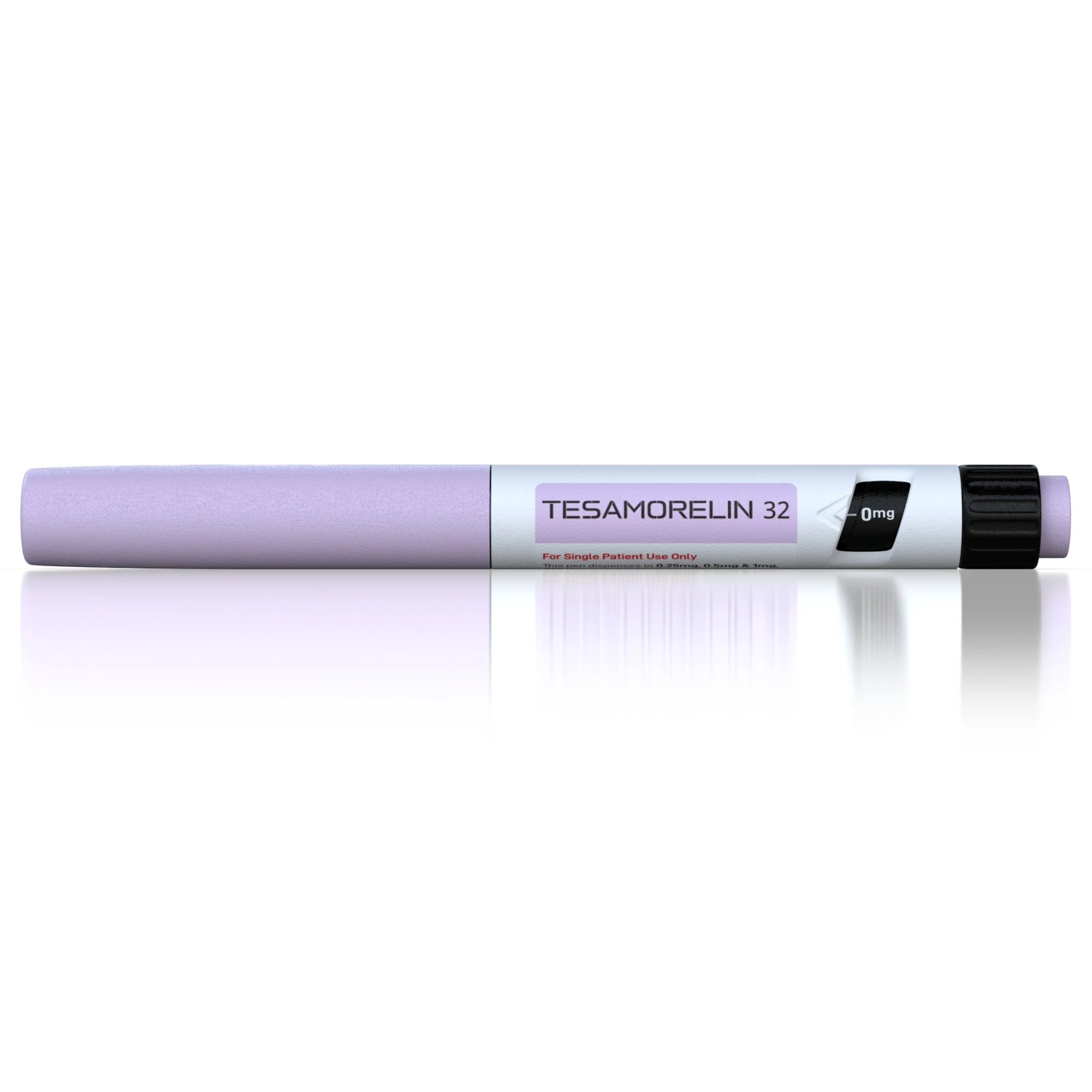
Research-chemical stores sell vials and pre-filled pens, and a few list nasal sprays or capsules. None of these is the licensed product, and we know of no published human trial of a nasal or oral form.
Routes used in studies: Subcutaneous.
Side effects and safety
On the US label, the most common side effects (in more than 5% of people) were joint pain, redness and itching at the injection site, pain in the arms or legs, swelling of the limbs and muscle pain. Injection-site reactions affected 25% of people on tesamorelin and 14% on placebo over the first 26 weeks, and hypersensitivity reactions such as rash and hives affected 4%. In the first phase 3 trial, more people withdrew because of side effects on tesamorelin than on placebo.
The label also warns of:
- Fluid retention, including swelling, joint pain and carpal tunnel syndrome.
- Raised IGF-1, whose long-term effects are unknown.
- Glucose intolerance or diabetes.
- Cancer: tesamorelin raises growth hormone, a known growth factor, so it must not be used with active cancer and should be stopped if cancer returns.
- Higher death rates reported with growth hormone in acutely critically ill patients.
About half of treated people developed antibodies to tesamorelin; in the trials, visceral fat fell similarly with or without them. On interactions, the label advises monitoring with drugs broken down by CYP450 enzymes, and notes that people on glucocorticoid replacement may need a higher glucocorticoid dose.
Research-grade products add risks the trials cannot describe: wrong dose, contamination, or a different substance altogether.
- Injection-site erythema / reactions
- Arthralgia
- Peripheral oedema
- Raised blood glucose
Reported in studies — not a safety assessment for human use. All reported Tesamorelin side effects →
Who should not use Tesamorelin
The US label lists four contraindications:
- Disruption of the hypothalamic-pituitary axis, for example after pituitary removal or surgery, a pituitary tumour, head radiotherapy or head injury.
- Active cancer. Any earlier cancer should be inactive, with treatment complete.
- Known hypersensitivity to tesamorelin or any ingredient.
- Pregnancy, because changing visceral fat offers no benefit in pregnancy and could harm the unborn baby.
The label also advises against breastfeeding, states that safety is not established in children (in whom it may cause excessive growth), and has no information on people over 65. It calls for glucose checks before and during treatment, and for considering stopping in critically ill patients.
Anyone considering this medicine should speak to a qualified doctor. This page is not a substitute for medical advice or the product label.
Tesamorelin versus sermorelin, CJC-1295 and somatropin
All four act on the growth hormone system, but at different points and with very different evidence:
- Tesamorelin is a full-length GHRH analogue given daily. It is licensed in the United States for HIV-associated abdominal fat, on the strength of two phase 3 trials.
- Sermorelin is another GHRH analogue; the World Anti-Doping Agency lists it alongside tesamorelin. See its hub for the evidence.
- CJC-1295 is a long-acting GHRH analogue. In healthy adults, a single injection raised growth hormone for six days or more and IGF-1 for 9 to 11 days, with a half-life of about six to eight days (Teichman et al., 2006).
- Somatropin is recombinant growth hormone itself, and it has also been tested against HIV-associated visceral fat (Grunfeld et al., 2007).
Tesamorelin works only through a functioning pituitary, whereas somatropin supplies the hormone directly. We are not aware of a published head-to-head trial among these compounds, and comparing results across different trials and populations is unreliable. Read the side-by-side pages for the detail.
Stacking and combinations
We know of no published trial that combines tesamorelin with another peptide. Even so, some stores in our listings data sell blends that pair it with ipamorelin, with CJC-1295, or with MOTS-c and AOD-9604.
CJC-1295 is itself a GHRH analogue (Teichman et al., 2006), so adding it duplicates the pathway tesamorelin already uses rather than adding a new one. Fixed-ratio blends are also harder to verify, because the certificate must confirm each component. Any “stack” involving tesamorelin is untested.
Storage, reconstitution and handling
The licensed products show that storage depends on the formulation. The original Egrifta powder had to be refrigerated and kept from light. Egrifta SV and Egrifta WR vials are stored at room temperature in the original box to protect them from light. One product’s instructions therefore do not carry over to another.
Research-grade tesamorelin is mostly sold as freeze-dried (lyophilised) powder in sealed vials, with some pre-filled pens. Follow the storage conditions on the product’s own certificate of analysis, and treat a listing with no storage information as a warning sign.
This page does not give reconstitution volumes or self-injection instructions. These products are sold for laboratory research only.
Legal and regulatory status
Tesamorelin is a prescription medicine in the United States. The FDA approved it in 2010 as Egrifta, with later formulations Egrifta SV and Egrifta WR, for reducing excess abdominal fat in adults with HIV and lipodystrophy.
As of our last check, there is no EU-wide authorisation: the marketing application to the European Medicines Agency was withdrawn in 2012, when its committee held the provisional view that the benefits did not outweigh the risks. Status in other countries differs and changes; check the national regulator, such as the UK MHRA database linked below.
A licence for Egrifta does not cover research-grade tesamorelin sold “not for human consumption”. That label does not make human use legal or safe.
For athletes: the World Anti-Doping Agency prohibits GHRH and its analogues, naming tesamorelin, at all times.
Country-specific detail is on each country’s where-to-buy page.
Vial versus pen versus blend
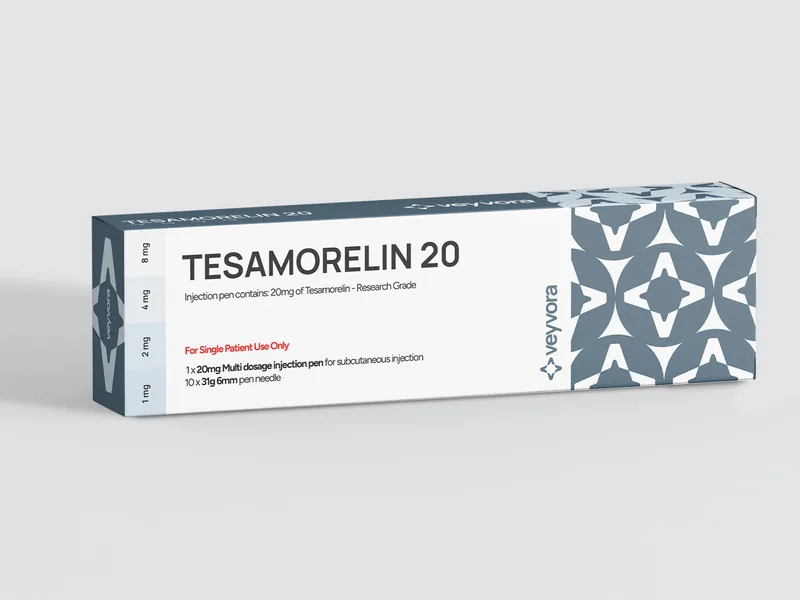
Most tesamorelin listings in our reviewed stores are freeze-dried powder in vials, which need reconstituting and let the researcher choose the concentration. Pre-filled pens and pen cartridges make up most of the rest; they need no reconstitution but fix the content per pen, and are harder to verify, because the certificate must cover a finished, filled product. A few stores list nasal sprays or capsules; we know of no published human trial of either form. Some also sell blends with ipamorelin, CJC-1295, MOTS-c or AOD-9604.
The only licensed tesamorelin products are powder vials sold as Egrifta, Egrifta SV and Egrifta WR. A research vial or pen is not one of them.
- Vial (lyophilised) · 116 listings
- Pen (pre-filled) · 33 listings
- Pen (pre-filled cartridge) · 2 listings
- Capsules/tablets · 2 listings
- Pen cartridge (refill) · 1 listing
- Nasal spray · 1 listing
Where to buy Tesamorelin


Tesamorelin from other brands
Products we found at several stores we review, with the number of stores selling each.
- UPA
- 2mgpowder (vial or mix-yourself pen) (8 stores)
- Body Pharm
- 10mgpowder (vial or mix-yourself pen) (6 stores)
- Noventra Pharma
- 10mgready-to-use pen (5 stores)
How we test and rate vendors
We review stores against their own product, policy and checkout pages and score them on a published rubric: value, range, delivery, returns, support and payment, with adjustments for certificates of analysis and red flags. We do not lab-test vials ourselves. Our full method → Our guide to how peptides are tested and how to read a COA explains what a certificate should show.
Our verdict
The science on tesamorelin is solid for a narrow question. In randomised trials of adults with HIV and excess abdominal fat, daily injections cut visceral fat by about 15% over six months and lowered triglycerides, and smaller trials reported less liver fat. On that evidence it is a licensed medicine in the United States. But the effect fades after treatment stops, the European regulator was not persuaded of a meaningful health benefit, and there is no trial evidence for weight loss or “anti-ageing”.
The real risk for a buyer is quality. In our latest pass, only about one in five tesamorelin listings showed a certificate of analysis on the product page. A research vial is not Egrifta. If you research this compound, only consider stores that publish a batch-specific, checkable certificate — and treat the absence of one as a reason not to buy. Our country pages show which reviewed stores do.
Frequently asked questions
Is tesamorelin the same as human growth hormone?
No. Growth hormone (somatropin) is the hormone itself. Tesamorelin copies GHRH, the hormone that tells the pituitary gland to release growth hormone, so it works through the body's own pituitary and boosts its natural pulses. The US label rules it out for people whose pituitary function is disrupted, for example after pituitary surgery.
What condition was tesamorelin actually studied and licensed for?
Excess abdominal (visceral) fat in adults with HIV and lipodystrophy, a fat build-up that can occur during antiretroviral therapy. That is its only licensed use, in the United States as Egrifta. Smaller trials have also studied liver fat in people with HIV.
Does the reduction in visceral fat last after treatment is stopped?
No. In the phase 3 extension studies, people switched from tesamorelin to placebo regained visceral fat, while those who continued kept a reduction of about 18% at 52 weeks.
Can tesamorelin be used for general weight loss or “anti-ageing”?
It was not studied or licensed for either. The US label states it is not indicated for weight loss and describes its effect on weight as neutral. The trials measured visceral fat in people with HIV, not body weight or ageing.
Is tesamorelin registered?
In the United States, yes: the FDA approved it in 2010 as Egrifta, with later formulations Egrifta SV and Egrifta WR, for one use. In the European Union the application was withdrawn in 2012. Status elsewhere varies; see the legal section.
Is tesamorelin (Egrifta) registered, or are listings research-grade only?
The registered product is Egrifta, a prescription medicine. Tesamorelin sold by research-chemical stores is not Egrifta: it is sold for laboratory research only, and its identity and purity are unverified unless a credible batch certificate shows otherwise. None of the research listings in our latest pass is sold as Egrifta.
Where can I buy tesamorelin, and how do reviewed vendors document it?
Egrifta is a prescription medicine where it is approved. Research-chemical stores list tesamorelin for laboratory research only, and in our latest pass only about one in five of those listings showed a certificate of analysis on the product page. Our country where-to-buy pages show which stores we have reviewed list it, and which publish a batch certificate. Specktra is a reviewer, not a seller.
References and further reading
- Falutz J et al. Metabolic effects of a growth hormone-releasing factor in patients with HIV. N Engl J Med 2007 PMID 18057338
- US FDA — Egrifta (tesamorelin) prescribing information, November 2010
- US FDA — Egrifta WR (tesamorelin) prescribing information, revised March 2025
- US FDA — Drugs@FDA: Egrifta (tesamorelin), BLA 022505, Theratechnologies
- Falutz J et al. Effects of tesamorelin, a growth hormone-releasing factor, in HIV-infected patients with abdominal fat accumulation: a randomized placebo-controlled trial with a safety extension. J Acquir Immune Defic Syndr 2010 PMID 20101189
- Falutz J et al. Effects of tesamorelin (TH9507) in HIV-infected patients with excess abdominal fat: a pooled analysis of two phase 3 trials with safety extension data. J Clin Endocrinol Metab 2010 PMID 20554713
- Stanley TL et al. Effects of tesamorelin on non-alcoholic fatty liver disease in HIV: a randomised, double-blind, multicentre trial. Lancet HIV 2019 PMID 31611038
- European Medicines Agency — Egrifta: withdrawn application (2012)
- Stanley TL et al. Effects of a growth hormone-releasing hormone analog on endogenous GH pulsatility and insulin sensitivity in healthy men. J Clin Endocrinol Metab 2011 PMID 20943777
- Teichman SL et al. Prolonged stimulation of GH and IGF-I secretion by CJC-1295, a long-acting analog of GH-releasing hormone, in healthy adults. J Clin Endocrinol Metab 2006 PMID 16352683
- Grunfeld C et al. Recombinant human growth hormone to treat HIV-associated adipose redistribution syndrome. J Acquir Immune Defic Syndr 2007 PMID 17592343
- World Anti-Doping Agency — Prohibited List (S2 Peptide hormones, growth factors, related substances and mimetics)
- US FDA — Egrifta SV (tesamorelin) prescribing information, revised February 2024
- Falutz J et al. A placebo-controlled, dose-ranging study of a growth hormone releasing factor in HIV-infected patients with abdominal fat accumulation. AIDS 2005 PMID 16052083
- Clemmons DR et al. Safety and metabolic effects of tesamorelin in patients with type 2 diabetes: a randomized, placebo-controlled trial. PLoS One 2017 PMID 28617838
- Stanley TL et al. Effect of tesamorelin on visceral fat and liver fat in HIV-infected patients with abdominal fat accumulation: a randomized clinical trial. JAMA 2014 PMID 25038357
- Stanley TL et al. Reduction in visceral adiposity is associated with an improved metabolic profile in HIV-infected patients receiving tesamorelin. Clin Infect Dis 2012 PMID 22495074
- Specktra store listing pass for tesamorelin, 13 November 2026 (65 stores, 166 listings)
- Falutz J et al. Long-term safety and effects of tesamorelin, a growth hormone-releasing factor analogue, in HIV patients with abdominal fat accumulation. AIDS 2008 PMID 18690162
- Ferdinandi ES et al. Non-clinical pharmacology and safety evaluation of TH9507, a human growth hormone-releasing factor analogue. Basic Clin Pharmacol Toxicol 2007 PMID 17214611
- UK MHRA — products database
- Colpaert T et al. Detecting GHRH analogue tesamorelin and its metabolites in post-administration human urine and serum using LC-HRMS/MS. Drug Test Anal 2026 PMID 43013893
- Makimura H et al. The effects of tesamorelin on phosphocreatine recovery in obese subjects with reduced GH. J Clin Endocrinol Metab 2014 PMID 24178787
- Ellis RJ et al. Effects of tesamorelin on neurocognitive impairment in persons with HIV and abdominal obesity. J Infect Dis 2025 PMID 39813152
- Badran AS et al. Body composition, hepatic fat, metabolic, and safety outcomes of tesamorelin in HIV-associated lipodystrophy: a meta-analysis of randomized controlled trials. Obes Res Clin Pract 2026 PMID 41545261
- Ditta AM et al. Efficacy and safety of tesamorelin in people living with HIV with lipodystrophy: a systematic review and meta-analysis. J Int Assoc Provid AIDS Care 2026 PMID 42538058
- Erlandson KM et al. Tesamorelin as an adjunct to exercise for improving physical function in HIV (TRIUMPH): a clinical trial protocol. BMJ Open 2026 PMID 42419889
- Fourman LT et al. Effects of tesamorelin on hepatic transcriptomic signatures in HIV-associated NAFLD. JCI Insight 2020 PMID 32701508
- Russo SC et al. Efficacy and safety of tesamorelin in people with HIV on integrase inhibitors. AIDS 2024 PMID 38905488
Plus the 13 human studies listed and linked above.